From product recalls to compensation and fines due to accidents and injuries in the workplace, manufacturers are losing billions every year.
Now, having stringent processes and policies in place to manage production lines is only the start.
To support product consistency and worker safety, the integration of manufacturing safety automation is leading the way to help reduce costs and compliance issues surrounding safety and product consistency.
With reports highlighting that the manufacturing sector recorded 51,000 workplace accidents in 2024/25, the sector lost a staggering 548,000 days due to injuries sustained in the workplace, and UK manufacturers received a total of 15,106 enforcement notices due to compliance issues surrounding safety there is now a growing demand for automation to be the measure that is put in place to reduce these figures and address safety concerns.
In this post, we look at how you can improve safety and product consistency with the integration of engineering-led automation.
Sector challenges
There are numerous risks in manufacturing, from the use of heavy machinery, hazardous materials, workers carrying out repetitive and monotonous tasks, equipment failure, and more – all of which can contribute to workplace accidents.
Of course, there are risk assessments and measures put in place to reduce and mitigate these, but without the right implementation of safety systems like automation protocols, can they really be eliminated?
Risks within manufacturing typically fall into three categories:
- Safety
- Compliance
- Product quality.
All three of which have a significant impact on business. For example, safety issues can negatively affect staff morale and absences, which can lead to lost days due to sick and limited resources.
Compliance can result in production being halted and fines being served. And product quality can lead to a downturn in productivity and the business gaining a negative reputation within the sector.
The good news is, for manufacturing engineers, automation is now a cost-effective solution to help mitigate these risks and support operational efficiency, worker safety, and product consistency.
How automation improves safety and consistency
Removes dangerous tasks
Automation can directly improve worker safety, helping to distance employees from clearly identified hazards.
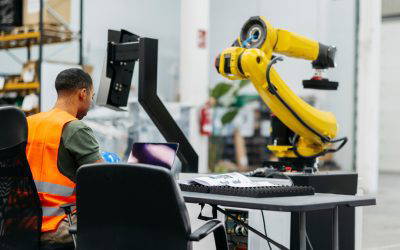
For example, robotic arms can be integrated to prevent injury from heavy lifting, carrying out dangerous tasks rather than people. Automated fluid dispensing systems can be put in place to reduce direct exposure to harmful chemicals, materials, and even extreme temperatures, isolating the danger.
In some instances, these types of automated systems can also be managed and controlled remotely, allowing you to keep employees at a further distance.
Reduces human error
Automation has become the standard solution for removing monotonous and repetitive tasks while keeping productivity and efficiency high.
Often, manufacturing tasks must be carried out repeatedly and in the exact same way. However, fatigue and exhaustion when these tasks are carried out manually often increase the likelihood of mistakes and accidents in the workplace, as well as lowering staff morale.
Instead, with the implementation of automation, you can not only free up worker and resource capacity, allowing you to upskill your teams, but you can also improve safety, product accuracy, and increase overall effectiveness. Precision tasks are carried out to perfection, ensuring consistency across the entire production line.
Meets strict safety standards
Safety regulations have become more stringent over recent years, with worker safety placed at the forefront of all enforcement notices issued.
Automation and machinery can help meet compliance regulations by providing consistency in production, as deviations in products can be avoided, meaning fewer defective or unsafe products passing through the production line.
In addition, you will be provided with documents and detailed logs that act as a clear record of compliance for all elements of production.
With systems such as predictive maintenance, you can monitor equipment and machinery, detecting any mechanical wear or anomalies before it becomes a major issue leading to dangerous (and costly) breakdowns. By monitoring systems and detecting unsafe conditions, repairs can be carried out and even shutdowns implemented if necessary.
Improves quality control
Automation can help to eliminate variability. With precision controls, standardised processes can be implemented to meet exact specifications, offering consistency of product every single time.
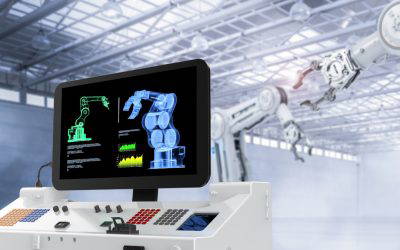
With systems such as real-time monitoring and computer vision, you can instantly identify any potential safety issues (and catch defects), allowing you to put mitigations in place as soon as possible.
Using data in this way drives safer decisions as well as operational efficiencies through strict quality control and programmes devised to provide safety alerts.
Supports continuous process monitoring
Investing in building, custom and scalable automation technology such as sensors for real-time safety monitoring, you’re not only provided with early warning signs if something isn’t right, but you are also provided with a 24/7 view, the ability to initiate shutdowns if required, and a way of ensuring a controlled and safe way of handling materials.
Minimising accidents and waste, you can create a culture of continuous improvement, making production more sustainable, safe, and environmentally friendly.
Improves productivity/efficiency
Not directly linked to safety, but we can’t talk about automation without mentioning the increase in efficiency and productivity these technology stacks can and do bring.
Working faster, with more precision, and offering continuity no matter how long production has been running, automation also allows you to upskill your workforce, which can open up further opportunities and support business growth.
Innomech
Automated systems reduce risk and deliver predictable, repeatable results, which, as we know, is critical for regulated environments such as medical device manufacturing.
Drastically reducing risk and accidents, automation can support a safer work environment while increasing productivity and efficiency; however, it’s essential that you work with the right team who have the experience and insight to support your move to automation.
To find out more and to view our machine integration capabilities, book a call with a member of our team today.